
When Is the Best Time to Begin Ancestral Healing? The Lunar Cycle Guide
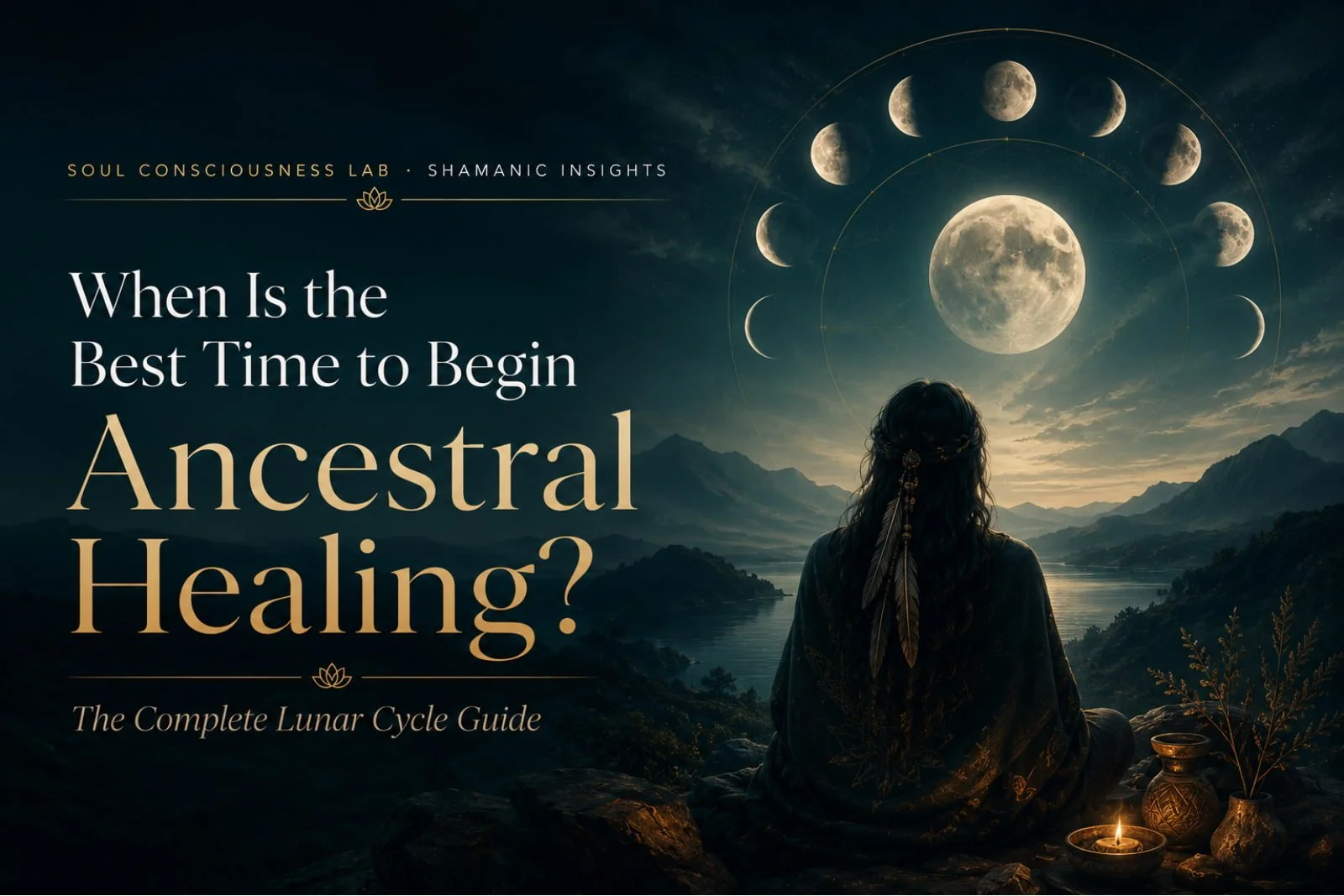
When Is the Best Time to Begin
Ancestral Healing?
The Complete Lunar Cycle Guide
The ancestors respond to sincerity, not the calendar — yet every shamanic tradition recognises that the lunar cycle opens specific doorways for lineage healing. Here is what the traditions, and Dr. Rashhi's training lineage, teach about timing this sacred work through the moon's phases.
Ancestral trauma is not metaphor. It is an energetic inheritance passed through generations — unfinished emotions, unspoken grief, and survival patterns that live inside us until they are consciously released. Shamanic traditions across cultures have long understood that certain windows in the lunar cycle amplify this work, thinning the veil between the living and the ancestral realms.
"What you do not release during the waning moon will follow you into the next cycle. It is a sacred window to rest, let go, and reflect." — Indigenous Elder teaching
This guide maps all six lunar phases to their specific ancestral healing medicine — from the New Moon's doorway of intention to the Dark Moon's deepest dissolution — including the Pitru Paksha window where both Vedic and shamanic traditions converge on the same sacred fortnight.
Interactive lunar map
The Six Moon Phases & Their Ancestral Medicine
Tap any moon phase on the wheel to reveal its healing medicine and practices.
↑ tap any moon phase to explore its healing medicine
Step by step
The Complete Lunar Healing Journey
Tap each phase to expand detailed practices and ceremony guidance.
The new moon is a time of darkness, stillness, and infinite potential — the pause between cycles. In shamanic traditions, this is the moon of vision quests, fasting, and deep listening. This is where ancestral healing begins: not with ceremony, but with sincere intention. If you are new to this work, simply sit in silence, light a candle, and speak the names of your ancestors aloud. That act alone begins the work.
- Sit in quiet meditation and set your healing intention for the lineage
- Speak the names of three ancestors you wish to work with
- Begin a journal dedicated to ancestral patterns in your life
- Create or cleanse your ancestral altar space
- Fast for a portion of the day if guided — a traditional new moon practice
As the moon grows in light, energy rises and expands. The waxing phase supports momentum and preparation. In shamanic practice, this is the time to build the physical and energetic container — the altar, the offerings, and the understanding of your lineage that will anchor the deeper work ahead.
- Build or expand your ancestral altar with photographs and meaningful objects
- Gather offerings: water, incense, candles, flowers — whatever speaks to your lineage
- Research your family history — this is itself a form of healing
- Begin a daily practice of speaking to your ancestors, even briefly each morning
- Smudge your space with palo santo or sage to prepare the energetic field
The full moon represents peak spiritual power — the veil between the living and ancestral realms is thinnest here. Shamanic journeys are more vivid, ancestral contact more direct. Across Andean, Chinese, Hindu, and Indigenous traditions, this is the sacred time for community ceremony and ancestor offerings. In the Pachakuti Mesa Tradition from the Andean lineage, this window extends three days before and after the full moon peak.
- Conduct a shamanic journey to the ancestral realm — lower or upper world
- Hold a fire ceremony: write inherited burdens on paper and offer them to flame
- Place moonlit water offerings at your altar — blessed under open sky
- Join a group healing circle or supervised ceremony if available
- Work with a trained practitioner for soul retrieval within the lineage
If there is one phase that shamanic traditions universally designate for ancestral healing, it is this one. As the moon recedes, inherited burdens can be released. Among Andean communities, shamans lead purification ceremonies using palo santo and coca leaves specifically during this phase. Celtic traditions use fire ceremonies and herbal cleansings. Indigenous tribes worldwide use drumming and prayer. The waning moon does not ask you to force anything — it asks you to allow the release that the full moon illuminated.
- Write each inherited pattern or burden on paper — burn or bury with clear intention
- Shamanic journey to identify and name root ancestral imprints
- Energy extraction practice — releasing intrusive ancestral energies from the field
- Cord-cutting ceremony: sever attachment to the wound, not to the ancestor
- Andean purification with palo santo smoke and spoken intention
- Work with a trained practitioner for supervised lineage clearing
Integration is where healing becomes permanent. The waning crescent asks for stillness — like earth absorbing rain after a deep storm. The ancestors continue working with you in silence during this phase. Do not rush into new projects. Subtle but significant shifts often appear now: old emotional triggers losing their charge, relationship patterns softening, dreams carrying ancestral messages.
- Long walks in nature — barefoot where possible, to ground what was released
- Leave gratitude offerings at your altar: water, flowers, food they loved
- Rest more than usual — healing is happening beneath conscious awareness
- Keep a brief daily note of what feels different in your body and relationships
- Close each day with gratitude for the lineage, including those who caused harm
The dark moon is considered by Andean, Vedic, Celtic, and Indigenous traditions to be the single most potent moment for ancestral work. What is released here does not return. In the Vedic calendar, Pitru Paksha (Shradh) — the sacred fortnight dedicated to honouring ancestors — aligns precisely with this waning-to-dark window each September. This is the one time of year where both shamanic lunar wisdom and Indian ancestral tradition converge on the same sacred window. The living and the departed stand closest in this absolute stillness.
- Complete darkness meditation — sit without candles, without sound, in absolute stillness
- Speak aloud the names of your ancestors across as many generations as you know
- Offer water to the earth — in Vedic tradition, water carries the ancestors home
- Pitru Paksha: perform Tarpan or Shradh rites if within your tradition
- Formally bless the lineage: past, present, and future generations
- No major decisions on the dark moon — this is a day of complete surrender
The Deeper Shamanic Understanding
Every season, every lunar cycle, and every transition is part of a great, unbroken flow. Creating sacred ceremonies during seasonal and lunar transitions — rather than treating them as isolated events — is how shamans have always navigated the relationship between the living and the ancestral realms.
The ancestors are always present. The moon simply opens the doorway wider at certain times. If you are asking which moon to choose, the waning moon moving toward the dark moon is the most traditionally recognised time across cultures for ancestral healing, release of inherited burdens, and generational repair.
Sincerity counts more than timing. Begin when you feel the call. The ancestors have been waiting — not impatiently, but with a patience that spans generations.
The Level 3 Advanced Shamanism Program at Soul Consciousness Lab specifically covers ancestral dimensions, ritual, lineage clearing, and generational pattern work in a supervised residential setting. Learn more about the program →
Frequently Asked Questions
Begin Your Ancestral Healing Journey
Whether you are drawn to personal exploration or structured practitioner training, Soul Consciousness Lab offers supervised ancestral work and residential shamanic programs in Bangalore — with students from India, the USA, Dubai, Ireland, Mauritius, Nepal, and beyond.
Have questions about this work?
You may explore our trainings, sessions, or contact us for guidance.
