
Is Shamanism Black Magic, Tantra-Mantra or the Occult?

Knowledge Library · Foundations
Is Shamanism Black Magic, Tantra-Mantra or the Occult?
In Short
No. And the reason is not a matter of opinion or branding — there is a clear, checkable line between them.
Shamanic work is done with a person, for that person, at their request. Coercive ritual is done on someone who has not agreed to it, usually to bend their will, their affection or their fortune. That single difference separates the two completely.
This article explains what black magic and tantra-mantra actually mean in the Indian context, why shamanism gets confused with them, and how to tell the difference in any practitioner you meet — including us.
Why This Question Deserves a Straight Answer
In India, this is the question people are least likely to ask aloud and most likely to be thinking.
Someone reads about shamanism, feels drawn to it, and then encounters a phrase like working with spirits. And a whole set of associations arrives uninvited — the village tantrik, the man who promises to make someone fall in love with you, the stories every Indian family has about someone who paid a great deal of money to have something done to somebody.
Most people will not raise this in a conversation with a training institute. It feels rude. So they simply do not enrol, and nobody ever addresses the actual concern.
We would rather answer it directly. Not defensively, and not by insisting the association is absurd — because it is not absurd. There are real reasons the confusion exists, and they are worth understanding.
Three Different Things Get Confused Here
Before anything else, the terms need separating. In everyday Indian conversation these three are used almost interchangeably, and they are not the same.
1. Tantra — a genuine spiritual tradition
Tantra is a serious, sophisticated body of philosophy and practice within both Hinduism and Buddhism, developed over more than a thousand years. It has its own scriptures, its own lineages, its own scholars, and living teachers of real depth.
We have no quarrel with tantra, and nothing in this article is a criticism of it. It is a legitimate tradition that deserves the same respect as any other.
2. "Tantra-mantra" — the colloquial usage
What most Indians mean by tantra-mantra in ordinary speech is something quite different: ritual performed for hire, usually to influence a specific person or outcome. Making someone fall in love. Breaking a marriage. Ruining a competitor. Removing a curse someone else supposedly placed.
This is not classical tantra, and practitioners of classical tantra are often the first to say so. But the word has been borrowed, and the borrowing is what most people have in mind.
3. Black magic, kala jadu, the occult
The broadest and vaguest of the three — a catch-all for any ritual believed to cause harm, usually at a distance, usually to someone who does not know it is happening.
Notice what unites the second and third categories, and what is entirely absent from the first.
In both, the work is aimed at a person who has not asked for it and does not know about it. That is the defining feature. It is also precisely where shamanism stands on the opposite side.
What Shamanism Actually Is
Shamanism is among the oldest documented systems of spiritual and ceremonial healing known to humanity, found independently in cultures across the world — Siberia, Mongolia, the Amazon, the Andes, Africa, Australia, ancient Europe, and across India's own Indigenous and tribal traditions.
A shamanic practitioner enters a focused, non-ordinary state of awareness — deliberately, and deliberately leaves it again — in order to seek insight and healing in partnership with helping spirits and the natural world.
The work sits in three movements: seeing what is out of balance, restoring what has been lost or clearing what does not belong, and integrating the result into ordinary life.
It is a practice, not a religion. It asks for no belief and no conversion. People of any faith, or none, can engage with it.
The One Distinction That Settles It
People often try to draw this line in the wrong place. They ask whether spirits are involved, or whether there is ritual, or whether something invisible is being worked with. Those questions do not separate anything — ritual and unseen forces appear across almost every spiritual tradition on earth, including every major religion.
The real line is consent and direction.
Who asked for this, and who is it aimed at?
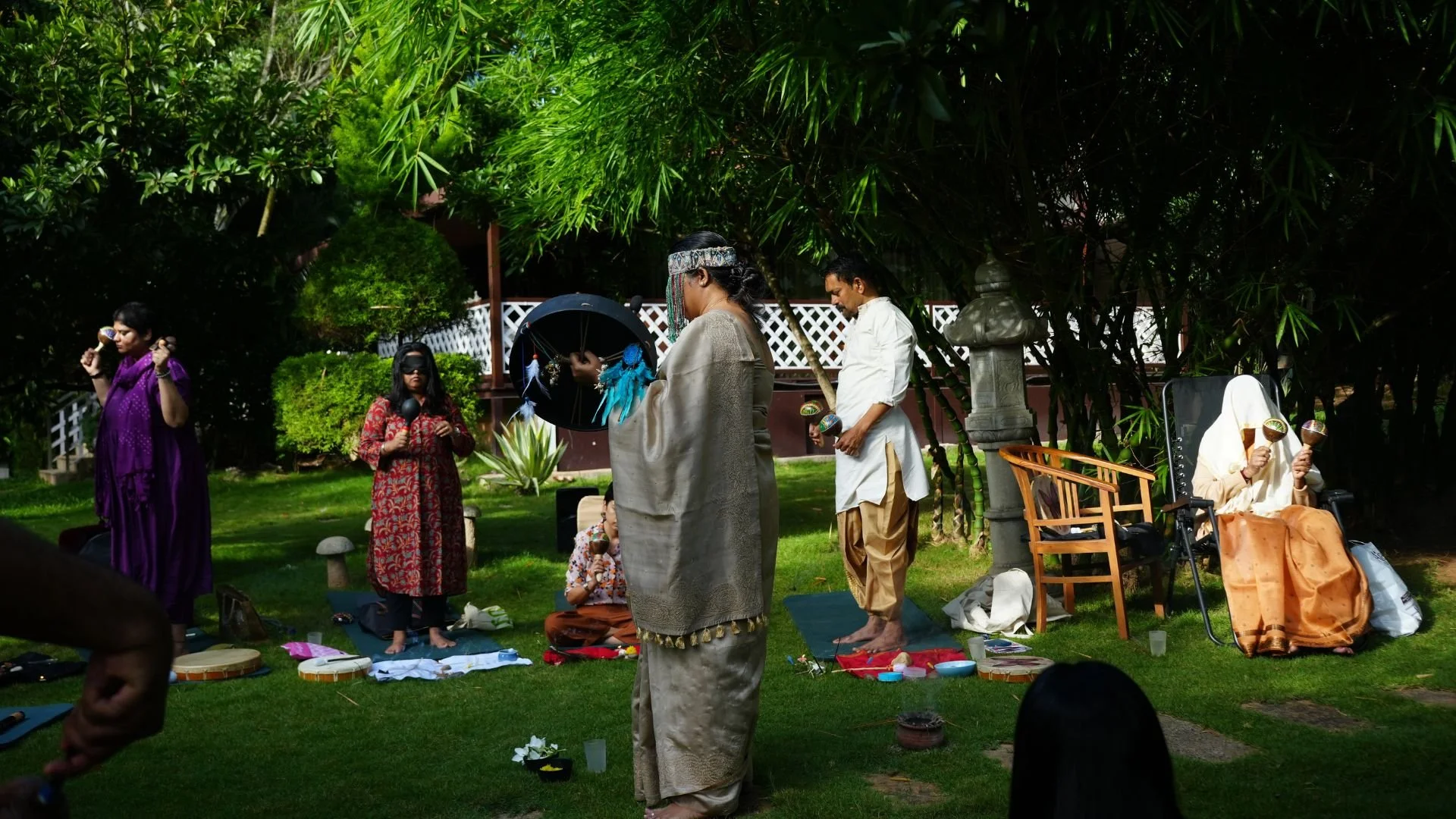
Shamanic healing is requested by the person who receives it. A client comes, describes what they are carrying, agrees to what is proposed, and can stop at any moment. The work is done for them, with their knowledge, in their presence.
Coercive ritual is aimed at someone else. A third party who has not asked, does not know, and would not agree. The whole point is to affect them without their consent.
That is not a difference of degree. It is a difference of kind.
Everything else follows from it.
Commands, binds or compels. The practitioner exercises power over forces and over people.
Asks, and works in partnership. The practitioner works with helping spirits, and can be refused.
Aimed at a third party, without their knowledge.
Done only for the person present, only at their request.
Sold on fear. You are cursed; something has been done to you; pay to have it removed.
Never trades on fear. A responsible practitioner will not confirm a curse, because it is not something anyone can know.
Secretive. Methods hidden, fees unclear, results promised.
Open. Methods described, ethics published, limits stated, no outcome promised.
Creates dependency. There is always another ritual required.
Aims at self-sufficiency. A person should leave more capable, not more reliant.
A genuine shamanic practitioner is a healer and a servant of balance — not someone who wields power over others. That is not a modern softening of the tradition. It is what the tradition has held across every culture that produced it.
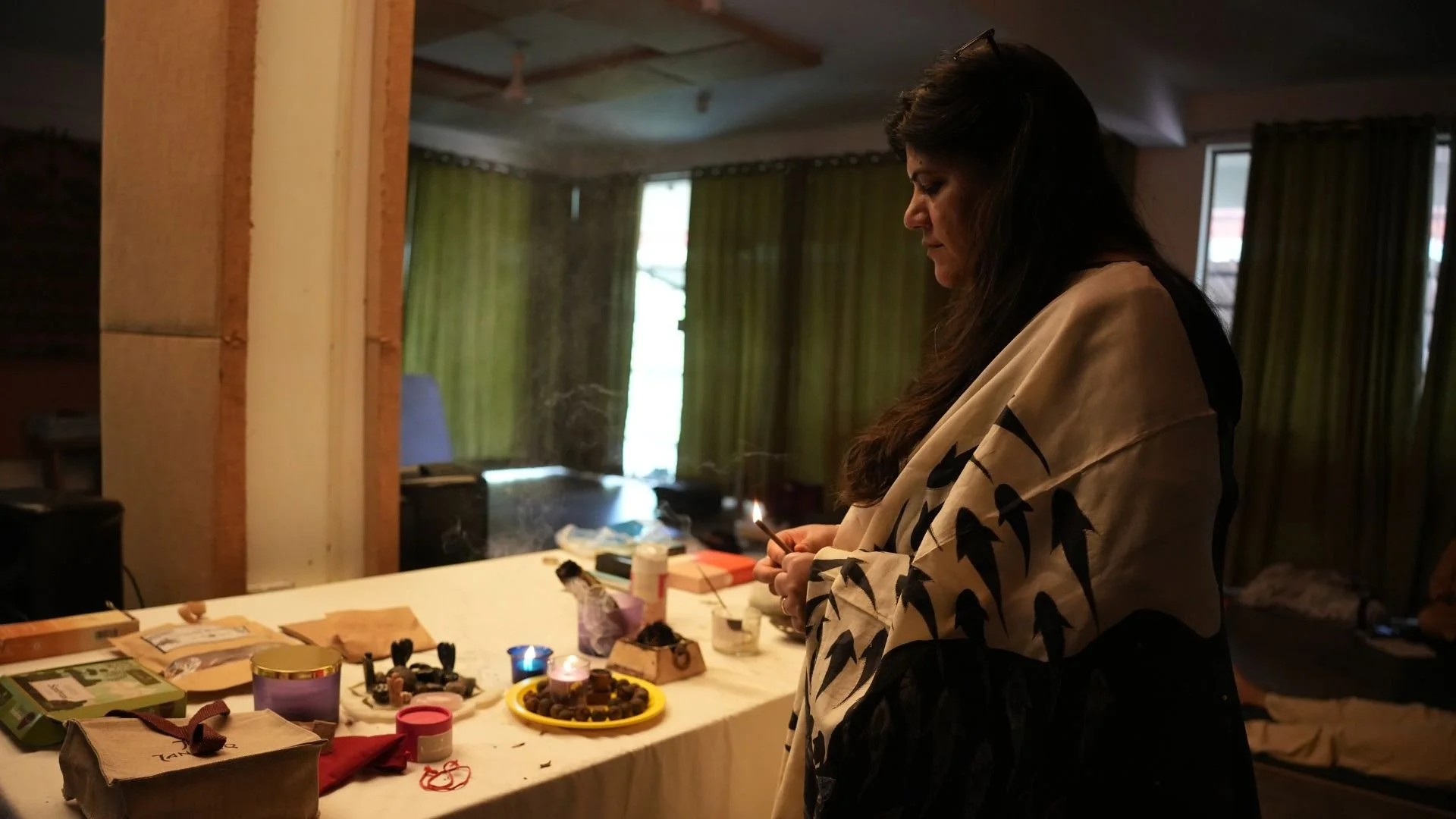
Altars are built from what participants gather. Divination is done with trees, stones, earth and fire.
Why the Confusion Exists
It would be easy to dismiss the association as ignorance. It is not. There are four real reasons.
The surface looks similar
Both involve ritual. Both involve something unseen. Both may involve fire, smoke, sound, objects. If you judge only by appearance, they can look alike — in the same way a surgeon and someone with a knife look alike if you ignore consent, training and intent.
English has no good word for this
India has many words for its own ritual specialists, and most carry heavy associations. When a practice arrives without a familiar name, people reach for the nearest label they have — and in India that label is often tantrik.
Colonial history flattened the categories
Under colonial administration, Indigenous healing traditions across India and elsewhere were widely recorded as superstition, sorcery or witchcraft. Traditions with distinct roles, ethics and community accountability were collapsed into a single dismissive category. Some of that flattening survives in how people speak today.
And some practitioners genuinely do trade on fear
This is the honest part. There are people, in India and elsewhere, who use spiritual language to frighten and extract money — who tell a worried person they are cursed and then sell the remedy.
The suspicion is not irrational. It is earned. Which is exactly why a serious practice should welcome the question rather than take offence at it.
What a Genuine Practitioner Will and Will Not Do
Here is the practical test. In a properly conducted shamanic practice:
- Nothing is done to anyone who has not asked for it. No work on an absent third party. No exceptions, however sympathetic the reason.
- Nobody is told they are cursed. Where someone arrives convinced something has been done to them, their distress is taken seriously — but the claim is not confirmed, because it cannot be known.
- No harm is undertaken. Not to a person, a rival, a relationship or a business. Not for any fee.
- No outcome is promised. Practices are described; results are not guaranteed.
- Consent can be withdrawn at any point, including mid-session, without explanation.
- Medical and psychiatric care is never displaced. Where someone needs a doctor, they are told so.
- The ethics are published, in writing, before anyone pays.
Ours are set out in full in our Ethical Standards, including the code every certified practitioner undertakes to follow.
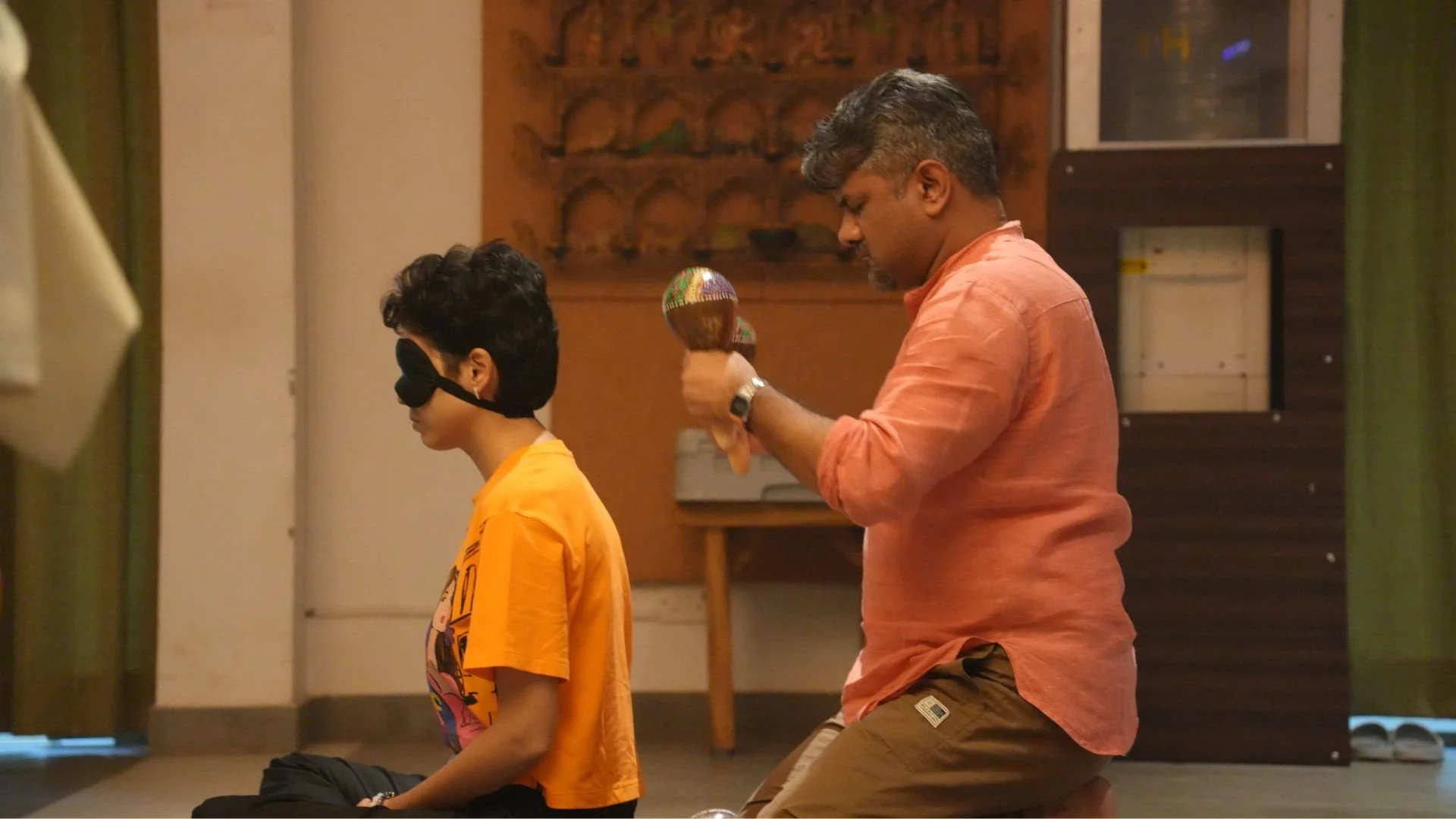
Students practice in pairs, under the close and direct supervision of the trainer, Dr Rashhi Sharma. Other students observe closely.
If Your Family Is Worried
This comes up constantly, and it is rarely mentioned to us until much later. Someone decides to train, and then has to explain it at home — to a parent, a spouse, an in-law — and has no vocabulary for it.
If that is your situation, these are the points that usually land.
“Nothing is ever done to another person. Only to someone who asks for it, in the room, who can stop at any time.”
“Nobody is told they are cursed, and nothing is sold on fear.”
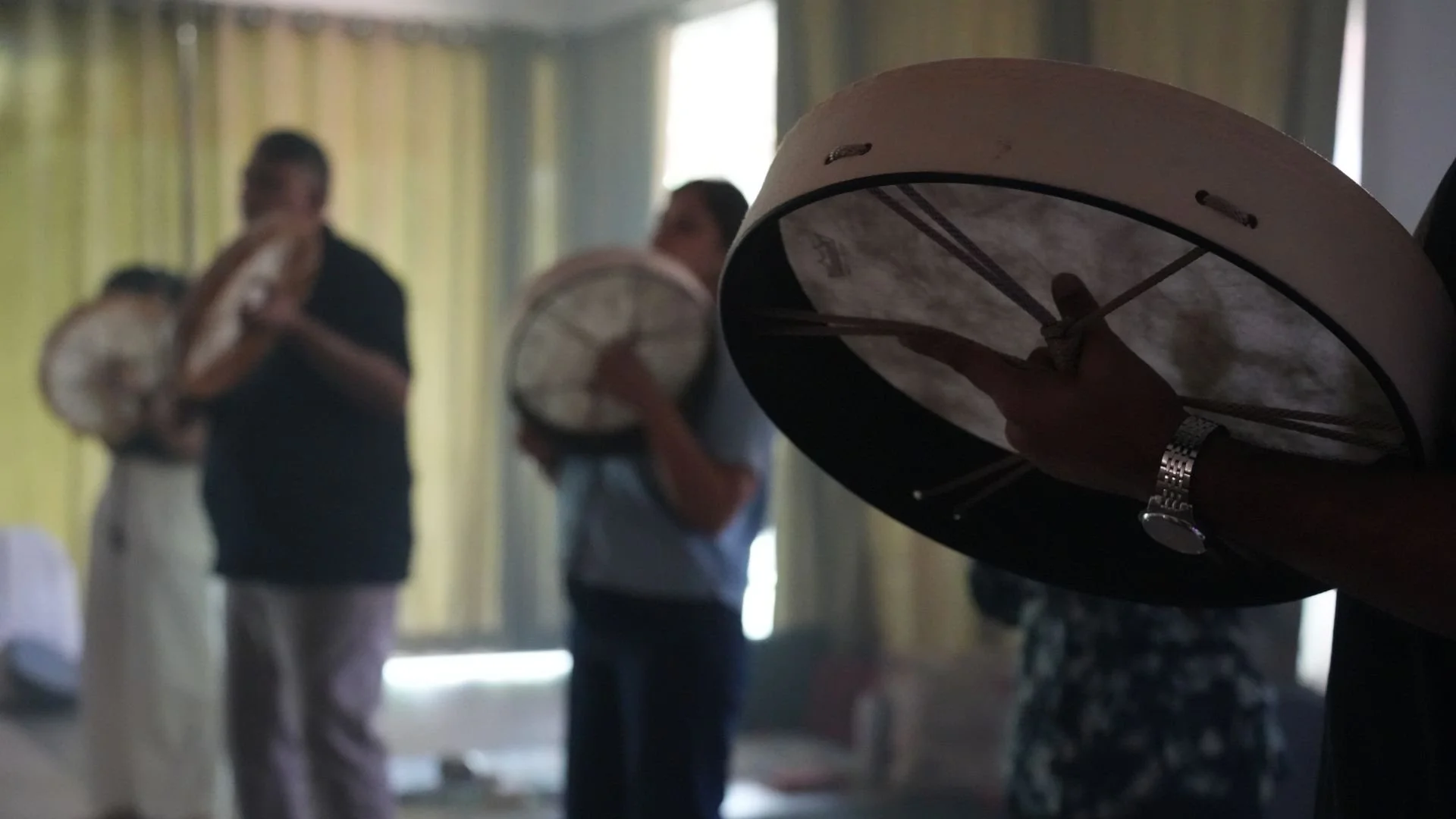
“There are no substances of any kind. It is done with a drum.”
“It does not replace doctors. It works alongside medical care and refers people to it.”
“The ethics are published on the website. You can read them yourself before I go.”
That last one tends to do the most work. A tradition that publishes its limits, its terms and its code of conduct is not behaving like something that needs concealing.
It is also worth saying plainly: this is a healing tradition with a long history in India's own Indigenous and tribal cultures, taught in many countries within professional and ethical frameworks. It is neither foreign nor fringe.
How to Check Any Practitioner
You should not have to take our word for any of this. Apply the same questions to us that you would apply to anyone.
- Ask what they will not do. A practitioner with no stated limits has not thought about their clients.
- Ask whether they work on people who have not consented. The answer should be an immediate no.
- Ask what happens if you say you are cursed. A responsible answer explores what you are experiencing without confirming the claim.
- Ask what they promise. Anyone guaranteeing an outcome is selling something else.
- Ask who trained them, and check it independently. Not a felt lineage — a named institution with a listing you can open yourself.
- Ask to see their ethics and terms before paying. If they exist only after payment, that tells you something.
The clearest warning sign of all: anyone who tells you that you are cursed, and then offers to remove it for a fee.
That single pattern — diagnose the fear, sell the cure — is the mechanism behind almost every case of exploitation in this field. A practitioner worth trusting will not do it, whatever tradition they name.
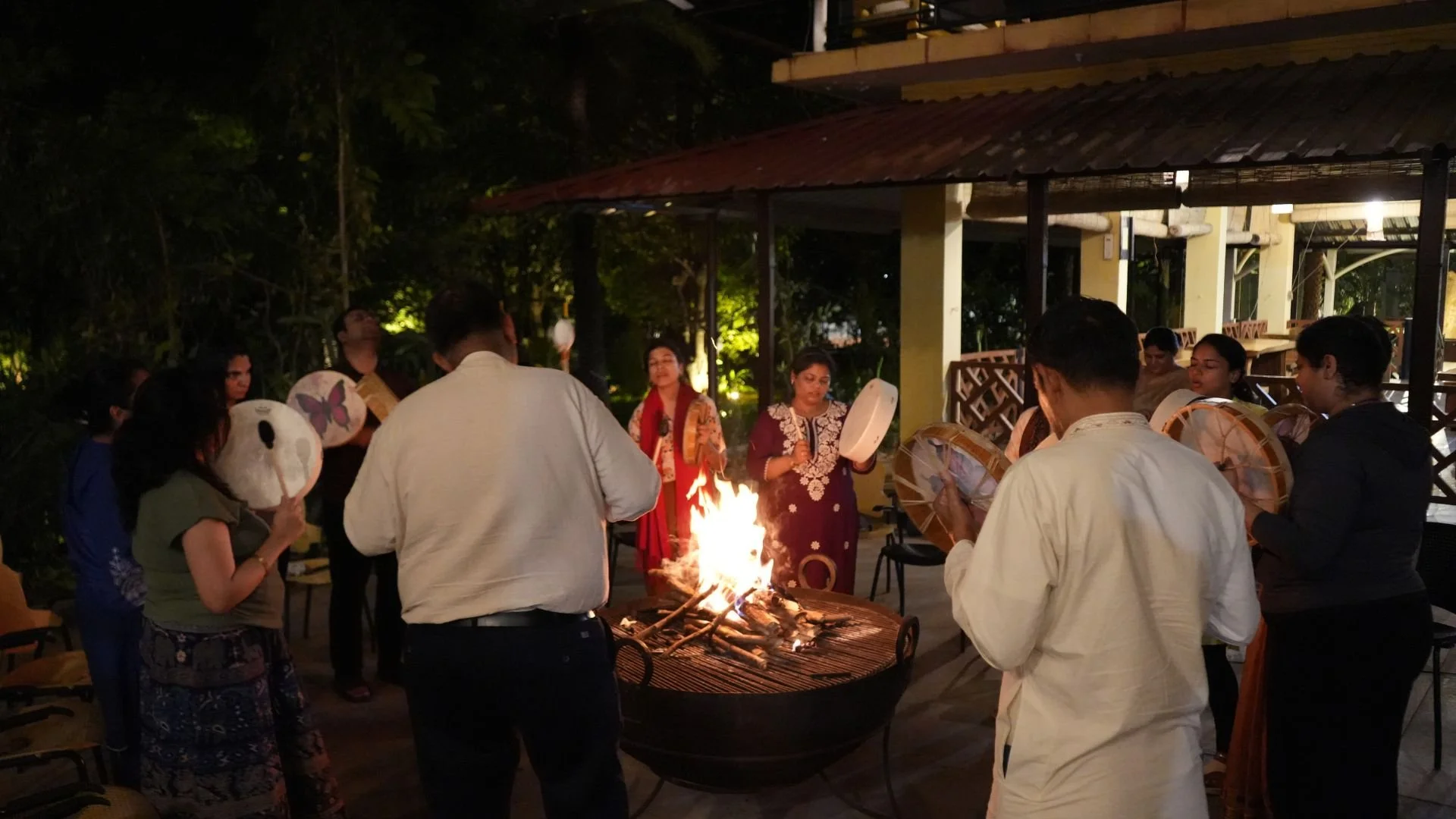
Ceremony and initiations with nature elements, including wind, fire, water, space and earth - are the essential elelemts of Shamanism.
In Summary
Shamanism is not black magic, and it is not what people mean colloquially by tantra-mantra.
The distinction is not a matter of positioning. It rests on a line anyone can check: shamanic work is requested by the person who receives it, and is never aimed at someone who has not consented. Coercive practice is defined by the opposite.
The confusion is understandable, and it has real historical and linguistic causes. But it is a confusion, and once the line is visible it does not survive.
If you are still uncertain — ask. A practice that cannot answer questions about its own ethics is not one worth entering.
Frequently Asked Questions
No. Tantra is a distinct and serious spiritual tradition within Hinduism and Buddhism, with its own scriptures and lineages. Shamanism is a separate tradition found independently across many cultures worldwide. They are different things, and neither is a version of the other.
What people usually mean by "tantra-mantra" in everyday Indian speech is something different again — ritual performed for hire to influence a person or outcome. That is not classical tantra either.
We do not confirm curses as fact, because it is not something anyone can know. Where someone comes to us believing something has been done to them, we take their distress entirely seriously and work with what they are experiencing — but we will never deepen a frightening interpretation, and we will never sell a remedy for a problem we have just declared.
Anyone who tells you that you are cursed and then offers to remove it for a fee should be left well alone.
No, and we would decline the request. Nothing is done to a person who has not asked for it and consented to it — no exceptions, whatever the reason offered. Influencing another person's will is not shamanic practice; it is the thing shamanic practice is most often confused with.
Shamanism is a practice rather than a religion. It has no scripture to accept, no deity to worship, and no conversion. People of every faith, and of none, engage with it. Whether it sits comfortably alongside your own beliefs is a question only you can answer — but nothing in the practice asks you to set them aside.
Shamanic tradition understands the work as being done in partnership with helping spirits. The word "helping" carries the weight: the practitioner asks rather than commands, works in relationship rather than control, and can be refused.
Practised properly — with training, supervision and grounding — it is a structured and contained practice. Practised without training, at depth and alone, it carries real risk. That is why training is residential and supervised.
Four reasons: the surface resemblance of ritual; the absence of a neutral word in common use, so "tantrik" gets borrowed; colonial-era records that flattened many distinct Indigenous healing traditions into a single category of superstition; and the genuine existence of practitioners who trade on fear. The suspicion is earned, which is why it deserves an answer rather than dismissal.
Related Reading
- What Is Shamanism? A Complete Guide
- The History of Shamanism
- Can Shamanism Be Learned Online?
- Our Ethical Standards and Practitioner Code
- Shamanism Training in India
References & Further Reading
- Harner, M. The Way of the Shaman. Harper & Row.
- Eliade, M. Shamanism: Archaic Techniques of Ecstasy. Princeton University Press.
- Foundation for Shamanic Studies — shamanism.org
Have questions about this work?
You may explore our trainings, sessions, or contact us for guidance.
