
Shamanism in India : A Living Tradition

Breathtaking view of the Western Ghats in Chikkamagaluru, Karnataka, India with lush greenery and tranquil skies
Knowledge Library · Indigenous Traditions
Shamanism in India: A Living Tradition
In Short
Most people assume shamanism is Siberian or Amazonian — something that arrived in India from elsewhere. The opposite is closer to the truth.
India has its own continuous traditions of ritual healing and spirit mediation: the jagar of the Uttarakhand hills, the ojha and gunia of central India's tribal communities, the oracles of Ladakh, the healers of the Northeast. Many are still practised today.
This article looks at what those traditions are, what happened to them, and why so few Indians know they exist.
A Word Borrowed From Somewhere Else
Start with the obvious problem. “Shaman” is not an Indian word. It comes from the Evenki people of Siberia, and it entered European languages through Russian travellers in the seventeenth century.
Anthropologists then applied it, loosely, to ritual specialists across the world who appeared to do similar things — entering altered states, mediating between a community and unseen forces, healing through ritual rather than only through medicine.
That is a useful category. It is also an outsider's category. None of the traditions described in this article call themselves shamanism. They have their own names, their own terms for their practitioners, and their own understanding of what is happening.
We use the word here because it is the word readers search for, and because the comparison genuinely illuminates something. But it should be held lightly — and the local names should be used wherever possible, which is what this article does.
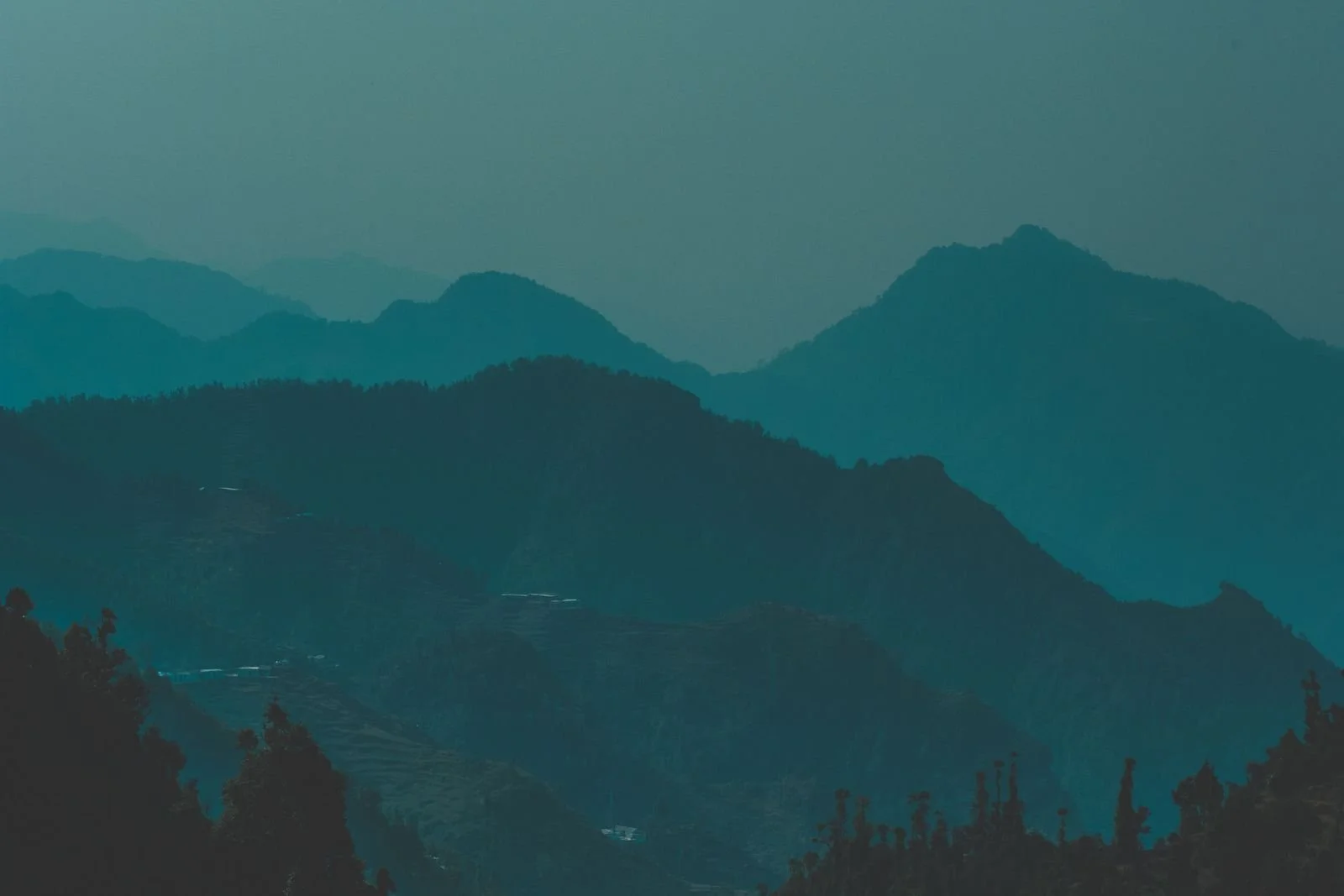
Serene view of misty blue mountains in Dhanolti, India at twilight, capturing nature's tranquility
The Himalayan Traditions
The northern hills hold some of the best-documented of India's ritual healing traditions, and some of the most alive.
Jagar
Kumaon & Garhwal, Uttarakhand
The word comes from the Sanskrit jāgṛ — to awaken, to be watchful. A jagar is a night-long ceremony in which deities and ancestral spirits are called to speak.
It is held around a sacred fire, the dhuni. A singer-narrator, the jagariya, performs the deity's story to drumming, and as the night deepens a designated medium receives the deity's presence. Guidance is then given — on illness, on disputes, on what has gone unresolved in a family.
Scholars of the tradition emphasise that this is not disorder. It follows strict rules, is led by trained practitioners, and is understood within the community as divine communication rather than loss of control. The same tradition is found across the border in far-western Nepal.
Dhami and Jhankri
Himalayan belt · strongest in Nepal, present across the Indian Himalaya
Often used interchangeably, but they describe different specialisations. A dhami is primarily a medium — a vehicle through which a deity speaks. A jhankri is a healer-shaman in the broader sense: someone who works with the drum, enters trance deliberately, diagnoses the spiritual dimension of an illness, and acts on it.
The jhankri's drum, the dhyangro, is central to the work — a point of real resemblance to shamanic traditions on the other side of the world, arrived at independently.
Lha-mo and Lha-pa
Ladakh
In Ladakh, deities are understood to communicate through designated oracles — lha-mo if female, lha-pa if male, translating roughly as “divine person”. They perform healing and divination in trance.
What makes Ladakh particularly interesting is that the tradition has not been fading. Researchers have documented a marked increase in practising oracles in recent decades — a response, it is argued, to the profound social pressures the region has faced.
These are not survivals of something dead. Villages across Uttarakhand and Himachal continue to hold jagar and oracle traditions openly, and they coexist comfortably with mainstream religious practice rather than standing apart from it.

Serene view of valleys and villages nestled among misty mountains in UT, India
Central India
The tribal belt running through Chhattisgarh, Madhya Pradesh, Jharkhand, Odisha and West Bengal holds India's largest concentration of these traditions.
Ojha and Gunia
Baiga, Santhal, Gond and other communities
Across many central Indian communities, the healer is called ojha or gunia. The roles vary by community, but the shape is consistent: a specialist who mediates between the physical and the spiritual, who diagnoses, and who treats through a combination of ritual and herbal knowledge.
Among the Baiga of Chhattisgarh, illness is understood as a disruption of harmony across physical, social and spiritual dimensions at once — not a malfunction of the body alone. The healer's job is to identify which dimension has been disturbed. The community's own name, Baiga, means a magico-religious healer.
Among the Santhal, one of India's largest tribal communities, the ojha is both priest and healer, leading community festivals as well as treating individuals. Ethnographers note that these specialists typically undergo long training, including fasting and extended periods of practice.
The herbal knowledge held alongside the ritual work is substantial. Baiga healers are documented using large numbers of forest plant species, with remedies adjusted for the person, the season and the conditions — a body of knowledge now shrinking rapidly as forests are lost and elders die untranscribed.
The Northeast
Traditional healers across the hill states
Meghalaya, Assam, Nagaland, Mizoram and neighbouring states
The Northeast holds a dense concentration of distinct healing traditions, community by community. Among the Garo of Meghalaya, research has found that the great majority of women consult traditional healers — not from a lack of alternatives alone, but for reasons of cultural identity, trust, accessibility and cost.
That finding is worth sitting with. It undermines the assumption that people use these traditions only because nothing else is available.
And Elsewhere
The picture continues well beyond these regions. Coastal Karnataka has Bhuta Kola; northern Kerala has Theyyam; Rajasthan has its bhopa traditions; there are village oracle and possession traditions across Himachal, Bihar, Tamil Nadu and Andhra.
Not all of these are the same thing, and lumping them together would repeat the mistake this article opened by warning about. Some are healing traditions, some are ritual theatre, some are ancestor veneration, some are all three. What they share is a worldview in which the unseen is not separate from ordinary life.
Lush green forest scenery with vivid foliage, captured at Thenmala, India
What They Have in Common
These traditions developed separately, across enormously different landscapes and languages. What is striking is how much they share — and how closely that shared pattern matches shamanic traditions on other continents.
- A designated specialist. Not anyone who feels moved to it. A recognised role, usually entered through training, calling, or inheritance — often all three.
- Deliberate altered states. Entered on purpose, for a purpose, and left again. Usually induced through drumming, chanting, or night-long ritual around fire.
- Illness as relational. Sickness understood as disturbance across body, community, ancestry and spirit at once — not located in the body alone.
- Diagnosis before treatment. The specialist first determines what kind of problem it is. That triage function is remarkably consistent across traditions.
- The community participates. Families and neighbours attend. Healing is a social event, not a private consultation.
- Herbal knowledge alongside ritual. These are rarely purely spiritual practitioners. Most are also botanists of considerable depth.
The convergence is the interesting part. Communities with no contact arrived at strikingly similar answers to the same human problems — which is precisely the observation that made anthropologists reach for a single word in the first place.
Why So Few Indians Know This
Here is the uncomfortable part.
Colonial classification
Under colonial administration, Indigenous healing traditions across India were widely recorded as superstition, sorcery or witchcraft. Traditions with distinct roles, ethics, training and community accountability were flattened into a single dismissive category. That framing outlived the administration that created it.
Modernisation and its hierarchy
As biomedicine expanded, traditional practice was positioned not as a different domain but as a lower rung — what people used before they knew better. Younger generations are widely encouraged to see these practices as primitive and leave them behind.
Association with harm
And there is a real problem underneath, which should not be smoothed over. In some places the same vocabulary of spirits and affliction has been used to accuse people — usually women, usually poor, usually vulnerable — of witchcraft, with consequences ranging from ostracism to violence.
That harm is real and it is not incidental. Any honest account of these traditions has to hold two things at once: a body of genuine knowledge and skill, and a history in which related vocabulary has caused serious injury.
Romanticising the first while ignoring the second is not respect. It is a different kind of dismissal.
Class and caste
Most of these traditions belong to Adivasi and rural communities. Their marginalisation is inseparable from the marginalisation of the people who hold them.

A collection of dried branches and pods scattered on rustic fabric, creating an earthy, natural scene
What We Do Not Claim
This is worth stating plainly, because it is where a great deal of writing about Indian traditions goes wrong.
These traditions are not ours
Soul Consciousness Lab® does not teach jagar, ojha or jhankri practice. We claim no lineage in them, no descent from them, and no authority to represent them.
They belong to the communities that hold them — who did not ask to be studied, and who are not served by outsiders adopting their terms.
Our own training is in core shamanism and in traditions Dr. Rashhi trained within directly on the ground: Andean and P'aqo practice in Peru, Celtic lineage in Ireland, Mexican tradition, and core shamanism through the Foundation for Shamanic Studies.
We write about India's traditions because they deserve to be known, not because we practise them.
There are also elements within some of these traditions that we do not practise, and it would be dishonest to imply otherwise. Animal sacrifice appears in a number of them. So do practices around accusation that we would consider harmful. Naming a tradition as valuable is not the same as endorsing everything done within it — a distinction that applies to every tradition on earth, including our own.
Why This Matters for Anyone Studying Shamanism in India
Two things follow.
First: this work is not foreign here. Someone in India drawn to shamanic practice is not adopting something imported. They are reaching toward a way of understanding illness and healing that this subcontinent has held continuously, in dozens of forms, for a very long time. That is worth knowing — particularly for anyone who has been told their interest is Western affectation.
Second: it should make anyone more careful, not less. A living tradition belonging to a marginalised community is not a resource to be borrowed from. If you are drawn to Indian traditions specifically, the honest paths are to learn from those communities on their terms, with their consent, over time — or to train in a tradition that is openly taught, and be clear about which you are doing.
What we would ask anyone not to do is take the aesthetics without the accountability. That is the pattern that has harmed Indigenous traditions everywhere, and India's are no exception.
A breathtaking aerial view of the countryside from Nandi Hills, India
A Tradition That Never Left
The jagar is still sung in Kumaon. Oracles still speak in Ladakh, in greater numbers than a generation ago. Ojha and gunia still treat people across central India, and across the Northeast the majority still consult traditional healers by choice.
None of this is a revival, because none of it stopped. What is missing is not the tradition — it is the general awareness that it exists at all.
That gap is worth closing, and closing carefully: with the local names, with the history included, and without pretending any of it belongs to those of us writing about it.
Frequently Asked Questions
The word is foreign — it comes from the Evenki language of Siberia. The practices it describes are not. India has continuous traditions of ritual healing and spirit mediation across the Himalaya, central India, the Northeast and the south, with their own names and their own histories.
No. Tantra is a distinct spiritual tradition within Hinduism and Buddhism. What people colloquially call "tantra-mantra" — ritual for hire aimed at influencing a third party — is different from both tantra and from the healing traditions described here.
The traditions in this article are community-embedded healing practices with recognised roles and accountability. We have written separately on why the confusion exists.
Yes, widely. Jagar ceremonies continue across Uttarakhand. Research in Ladakh has documented an increase rather than a decline in practising oracles. Studies in the Northeast find large majorities in some communities consulting traditional healers by preference. These are living practices, not historical ones.
Not in the way you might train in an openly taught modality. These traditions are held within specific communities, usually entered through calling, inheritance or long apprenticeship, and they are not offered as courses.
If you are drawn to them specifically, the honest route is relationship with those communities on their terms over time — not a training programme. Anyone selling certification in an Indian tribal tradition should be questioned closely about who authorised them to do so.
No. We teach core shamanism together with traditions Dr. Rashhi trained within directly — Andean and P'aqo practice in Peru, Celtic lineage in Ireland, Mexican tradition, and core shamanism through the Foundation for Shamanic Studies. We claim no lineage in India's Indigenous traditions and do not represent them.
Related Reading
- What Is Shamanism? A Complete Guide
- The History of Shamanism
- Is Shamanism Black Magic, Tantra-Mantra or the Occult?
- Can Shamanism Be Learned Online?
References & Further Reading
- Kakar, S. Shamans, Mystics and Doctors: A Psychological Inquiry into India and its Healing Traditions. University of Chicago Press.
- Sax, W. S. God of Justice: Ritual Healing and Social Justice in the Central Himalayas. Oxford University Press.
- “Indigenous Healing Practices in India: Shamanism, Spirit Possession, and Healing Shrines” — Springer.
- Kressing, F. “The increase of shamans in contemporary Ladakh: some preliminary observations.” Asian Folklore Studies.
- Elwin, V. The Baiga. John Murray. (Written in the colonial period; valuable as a record, and to be read with awareness of its framing.)
- Peer-reviewed literature on Baiga ethnomedicine and Garo health-seeking behaviour, cited in the text.
Have questions about this work?
You may explore our trainings, sessions, or contact us for guidance.
