Knowledge Library
Most people assume shamanism is Siberian or Amazonian. India has its own living traditions — Himalayan, tribal, regional — with their own healers, their own terms, and a history of suppression few know about.
In India this is the question people are least likely to ask aloud and most likely to be thinking. The answer rests on one line anyone can check — and it is not about spirits, ritual or power. It is about who asked, and who the work is aimed at.
An honest answer to whether shamanism can be learned online — what genuinely transfers through a screen, what does not, and nine questions to ask any teacher before you enrol.
Where you trained is not where you'll always practice. This guide covers the ethical principles for working with trauma and mental illness, PLR-specific safeguards, and the regulatory landscape across India, the US, UK, Germany, the EU, Russia, Australia, Singapore, the Middle East, and East Asia — with a clear pathway for how your SCL certification applies in each.
NLP and hypnotherapy are often confused, and often compared. This is an honest look at how each one actually works, what the evidence says, and why deep subconscious work tends to bring faster, more lasting change.
Many hypnotherapy training programmes look similar from the outside — similar claims, similar certificates, similar promises. The real differences only become visible once you know exactly what to ask. Here's the complete guide.
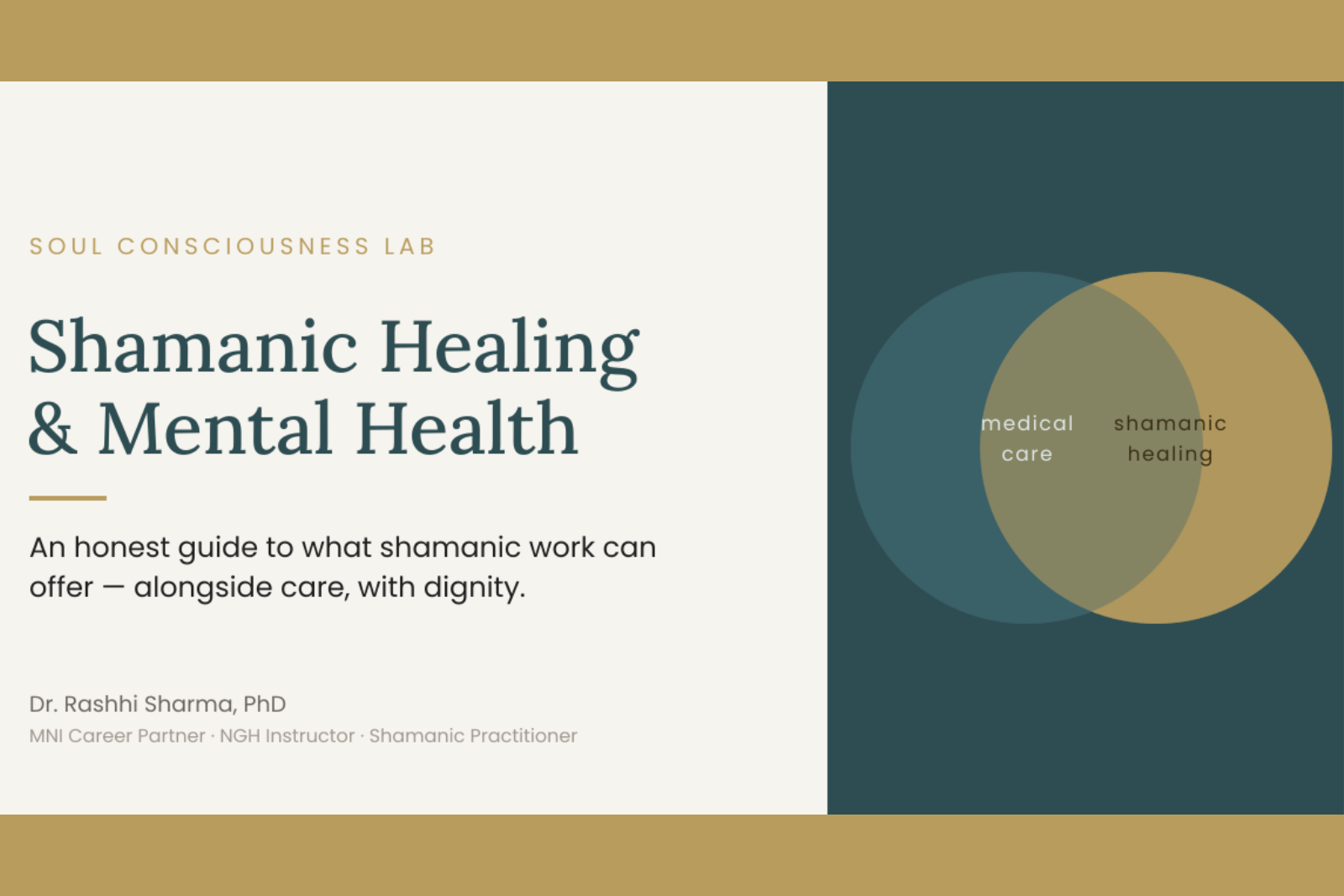
Can shamanic healing help with conditions like bipolar disorder, schizophrenia, or dissociation — the kind of states where hypnosis isn't suitable? An honest, warm guide to what shamanic work genuinely offers, how it supports a person alongside medical care, and the gentle first steps you can take from anywhere in the world.
The National Guild of Hypnotists is the most widely held credential in hypnotherapy worldwide — yet many people researching training have never heard of it before. This article explains exactly what NGH is and why it matters.
Becoming a certified hypnotherapist in India means understanding the difference between a weekend certificate and a credential that's internationally recognised and practice-ready. This guide explains what to actually look for.
Shamanism in India : A Living Tradition
Most people assume shamanism is Siberian or Amazonian. India has its own living traditions — Himalayan, tribal, regional — with their own healers, their own terms, and a history of suppression few know about.